Rheumatoid arthritis diagnosis


with reliable serological markers

Rheumatoid arthritis (RA) is a chronic, systemic autoimmune disease characterized by persistent synovial inflammation, leading to joint pain, swelling, stiffness, and potential joint destruction and disability. It primarily affects small joints symmetrically and may involve extra-articular manifestations.

Star_round_AI

Highly sensitive serological tests for the diagnosis of RA

Star_round_AI

Improves the diagnosis of RA and, therefore, patient management by helping to differentiate between severe and mild forms of the disease with anti-MCV detection

Star_round_AI

Full automation and complete traceability with Alegria 2

LP_RA_HERO
LP_RA_HERO
Image bloc_AI_Publication_1

RA and ACPAs

One of the most significant advances in the understanding and diagnosis of RA has been the identification of anti-citrullinated protein antibodies (ACPAs).

The most commonly used test to detect these antibodies is the anti-CCP (cyclic citrullinated peptide) test, though other assays, such as anti-MCV (mutated citrullinated vimentin), have also shown diagnostic relevance.

From a clinical perspective, ACPAs are highly specific for RA, with specificities often exceeding 95%, making them a valuable tool in distinguishing RA from other forms of arthritis. They can be present years before the onset of symptoms, allowing for earlier diagnosis and risk stratification.

MCV as the next biomarker

ACR/EULAR 2010 Classification Criteria

The ACR/EULAR 2010 criteria were developed to identify patients with RA earlier in the disease course, allowing for timely diagnosis and intervention.

To be classified as having RA under this system, a patient must achieve a total score of 6 or more points out of a possible 10, based on four key domains: joint involvement, serologic markers, acute-phase reactants, and symptom duration.

Joint involvement is a central feature, with scoring based on the number and type of joints affected. Involvement of one large joint is not sufficient for classification, while involvement of multiple small joints, especially more than ten joints including at least one small joint, carries the highest weight in scoring.

Serologic testing includes the assessment of Rheumatoid factor (RF) and ACPAs, such as anti-CCP or anti-MCV. The presence of these antibodies, particularly at high levels, significantly increases the classification score as they are strongly associated with RA pathology and prognosis.

ACR/EULAR 2010 Classification Criteria
RA_MCV

Anti-MCV

Anti-MCV (anti-mutated citrullinated vimentin) antibodies are a specific subtype of ACPAs, which play a central role in the pathogenesis and diagnosis of RA.


Vimentin is an intracellular intermediate filament protein expressed in mesenchymal cells. During inflammatory processes, especially in the synovial tissue, vimentin undergoes post-translational citrullination. The resulting mutated citrullinated vimentin (MCV) becomes antigenic and may trigger an autoimmune response in genetically susceptible individuals.


Anti-MCV antibodies target this modified form of vimentin, and their presence is highly specific for RA. These antibodies can be detected using ELISA-based assays, and they serve both diagnostic and prognostic purposes. From a clinical standpoint, they may be detectable in patients who are RF-negative or anti-CCP-negative, offering added diagnostic value in seronegative RA cases.

anti-MCV antibodies and early RA diagnosis

New Frontiers

CAR-T (Chimeric antigen receptor therapy) and T-cell engager are new therapeutic approaches for RA treatment in patients who are non-responders to the first-line options.


Anti-MCV-positive and anti-CCP-negative patient profiles may indicate a favorable therapeutic response or increased suitability for cell therapy.

BCMA-Targeted T-Cell–Engager Therapy for Autoimmune Disease
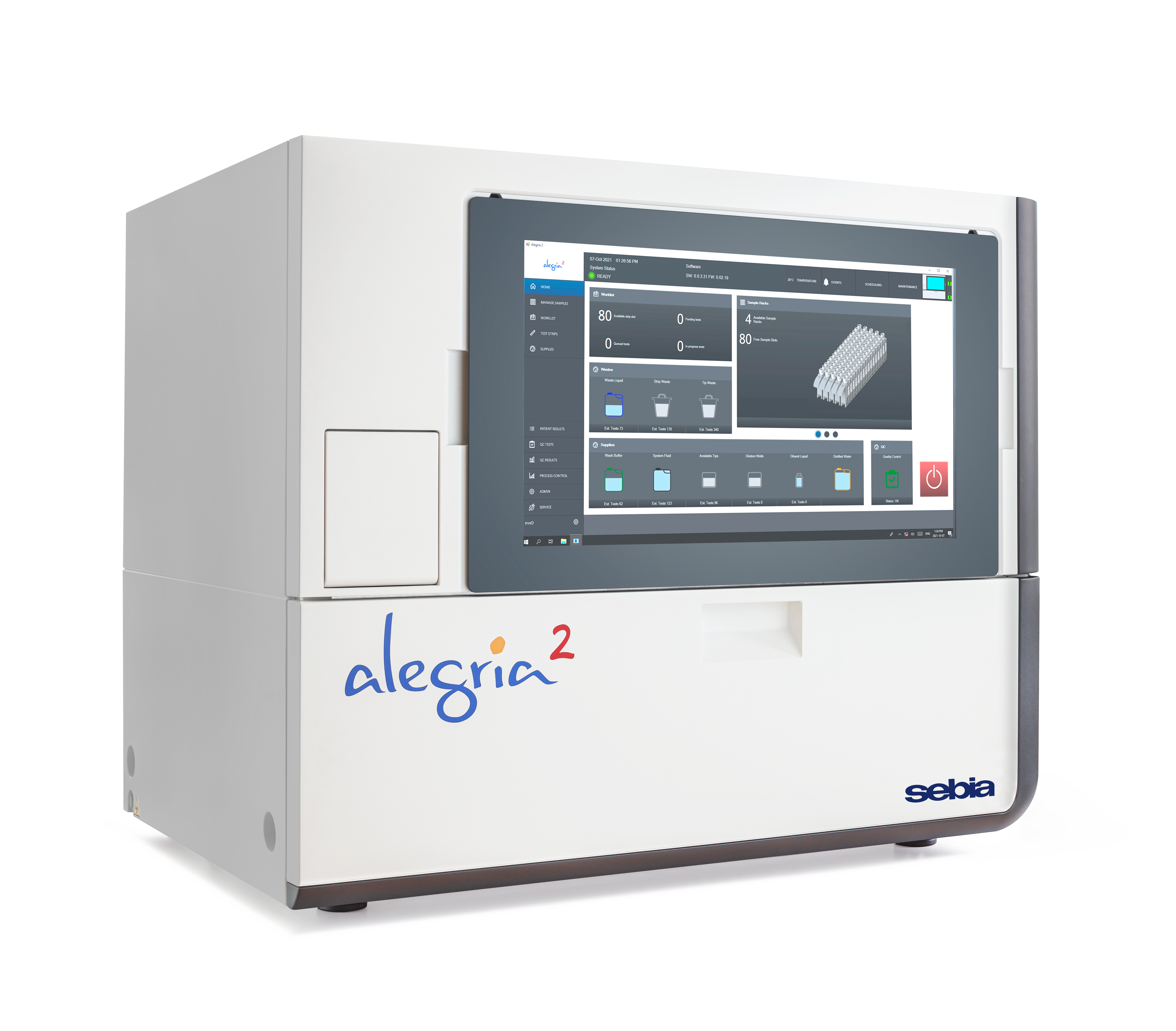
Sebia_alegria2_Totale_45mm_1

Alegria 2

Any assay, any time!

The random-access and fully automated Alegria 2 system provides a cost-effective sample-to-result solution with Sebia’s unique and comprehensive autoimmune and infectious disease assay portfolio, utilizing the ELISA-based Alegria Monotest Technology. This easy-to-use, customizable technique enables you to directly test any assay from the large portfolio at any time for optimized patient care.

DOWNLOAD THE Alegria 2 BROCHURE

I think the instrument will provide us the possibility of giving the results to the clinicians within a timeframe fitting clinical needs and will help to optimize the patients’ care pathway.

Lovorka Đerek

Assistant Professor, Ph.D., EuSpLM, University Hospital of Dubrava, Croatia